

What is edge computing?
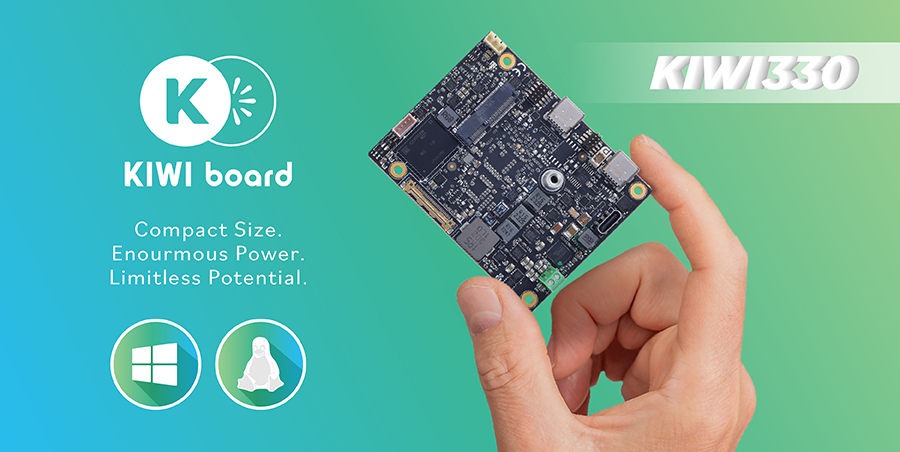
Every year, we connect more cameras, robots, and IoT sensors to our networks. They generate a constant stream of images, measurements, and events. Cloud computing is still essential, but relying only on a distant data center is not always ideal: latency can be too high, bandwidth too expensive, and sometimes data too sensitive to send everywhere. That’s where edge computing comes in. Instead of sending everything to the cloud, part of the intelligence moves closer to the devices into the factory, the building, or even inside the machine itself, often on a small embedded platform such as KIWI330.
What is edge computing?
Edge computing is an architecture where data is processed, filtered, and stored near its source, rather than exclusively in the cloud. The key is not just the hardware, but the location: a compact but capable computer, for example, a KIWI330 mounted in a control cabinet, sits at the edge of the network, directly connected to cameras, robots, or sensors. In a typical setup, the flow is simple: devices produce data, the KIWI330 processes it locally, and the cloud receives only what is truly necessary. Devices focus on capturing data and interacting with the physical world. The cloud focuses on heavy analytics and long-term storage. The KIWI330 sits in the middle and makes the system faster, lighter, and more resilient.
Benefits of processing at the edge
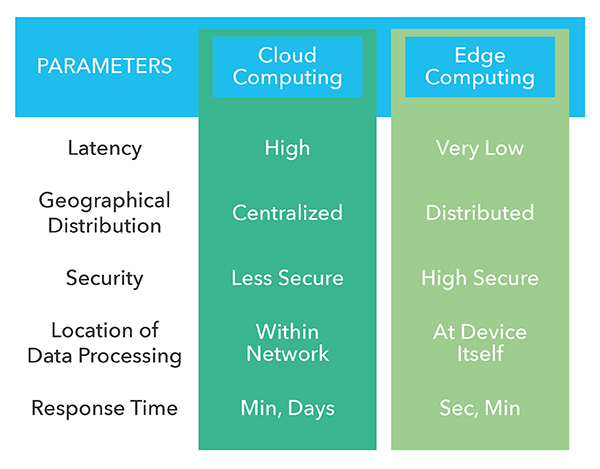
The benefits of edge computing become very visible when you implement them on a platform like KIWI330. Latency is reduced because decisions are taken a few centimeters or meters from the device instead of a few thousand kilometers away; for example, a robot cell connected to a KIWI330 can react immediately to a sensor event. Bandwidth usage drops because high-resolution video and high-frequency sensor data stay on the KIWI330; the network only carries compressed or summarized information, making large-scale deployments much more affordable. Resilience improves because, if the internet connection is slow or unstable, the KIWI330 can keep collecting data and enforcing local logic, then synchronize with the cloud once connectivity is restored. Privacy is also strengthened, since sensitive data can be processed on-site by the KIWI330 and only anonymized or aggregated information needs to leave the local environment.
Once this foundation is clear, the next article in this series takes a closer look at how to put edge computing into practice with KIWI330, walking through how this device–edge–cloud pattern can be applied step by step in real-world projects.
Device–Edge–Cloud as a modern pattern
Modern systems rarely choose between “only cloud” or “only local”. The most efficient pattern is usually a combination where devices capture signals and interact with the real world, edge nodes, such as KIWI330, process those signals in real-time and control local actions, and cloud platforms combine long-term data from many sites, run deep analytics, and manage fleets of devices. In this model, the edge is not a replacement for the cloud; it is a complement that enhances the whole system more responsive and efficient. Installed inside a control cabinet or machine, close to cameras and sensors, the KIWI330 acts as the local brain between devices and the cloud. It turns the abstract concept of edge computing into something tangible: a small, robust board that you can drop into your design to implement the device–edge–cloud architecture in a practical, deployable way.
About KIWI Board
KIWI board is a complete solutions provider, supporting every aspect of your project, from hardware to software and system integration, to get your application functioning securely, reliably, and at peak performance. KIWI board builds its products for high reliability, high performance, security, scalability, and versatility so customers can expect extended service life, quickly adapt to evolving system requirements, and adopt future technologies as they emerge.
Next steps
Ready to talk about your projects with a KIWI board expert? Contact us
Want to hear more from KIWI board? for our newsletter Sign up
Or request a quotation